
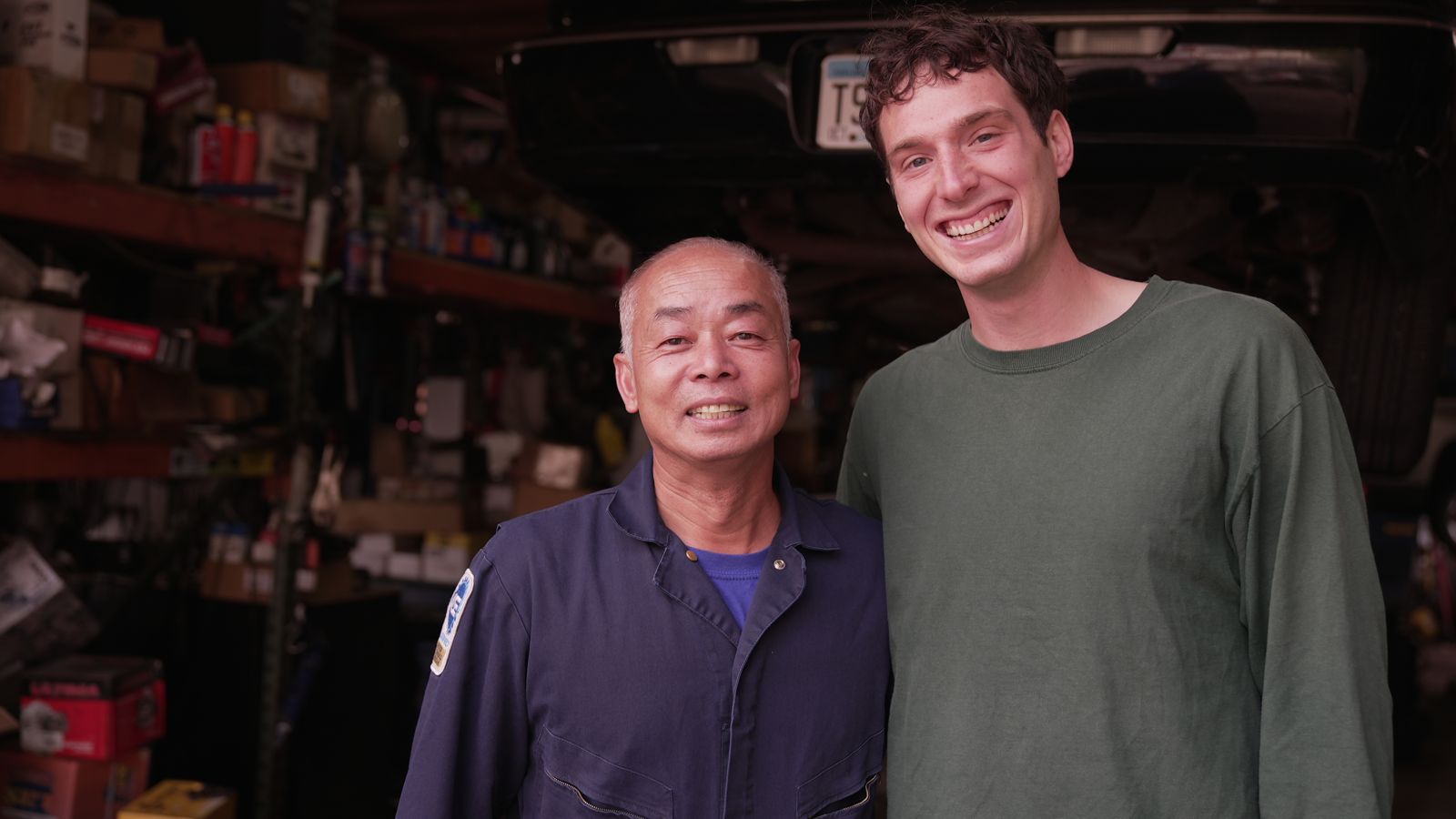
Nghia's Auto Service: The Story Behind Camden's Most Loved Mechanic
By Naomi Thomson · November 2026
Ask anyone around the neighborhood and you'll quickly learn Nghia does way more than affordable oil changes.
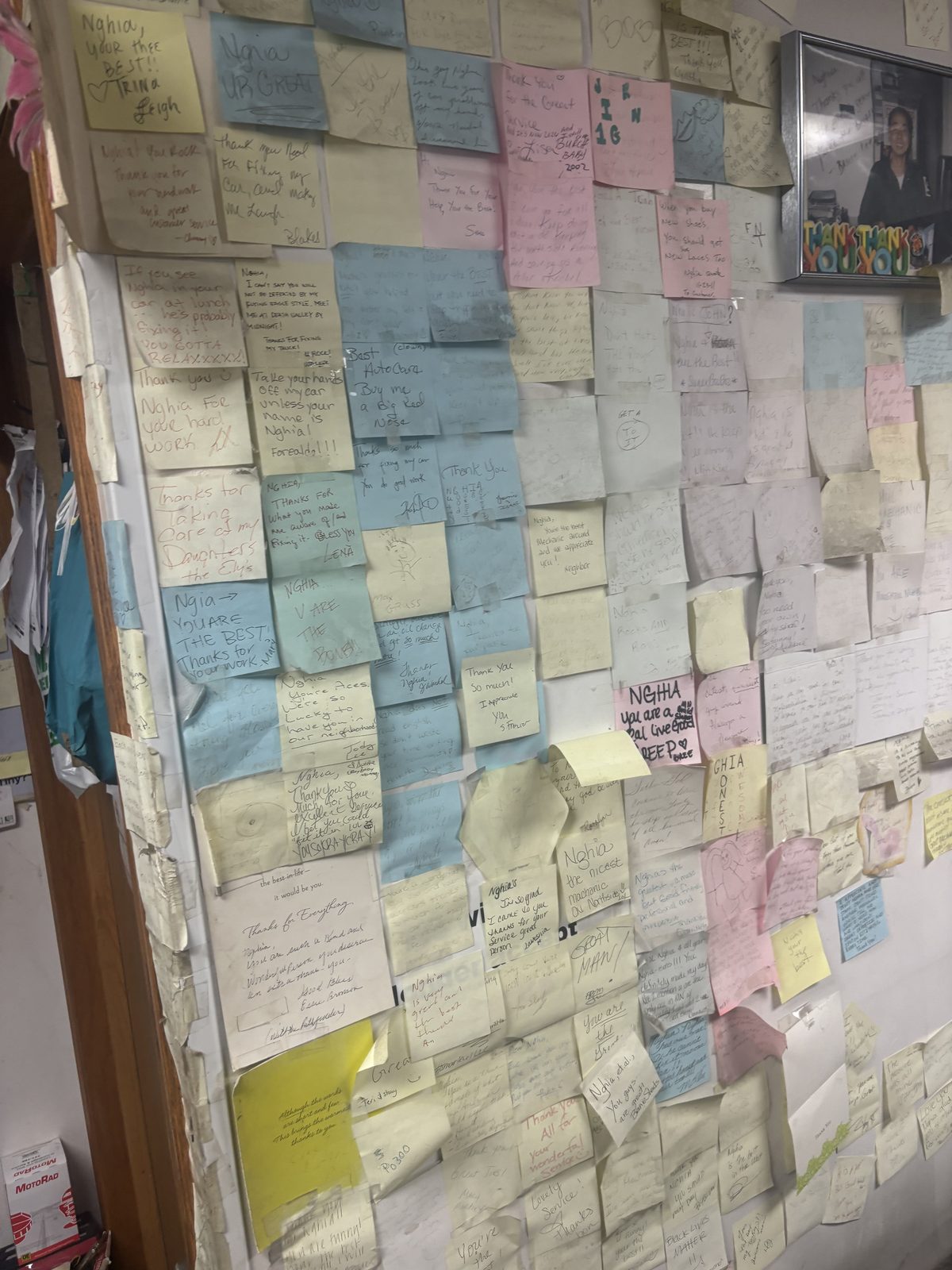
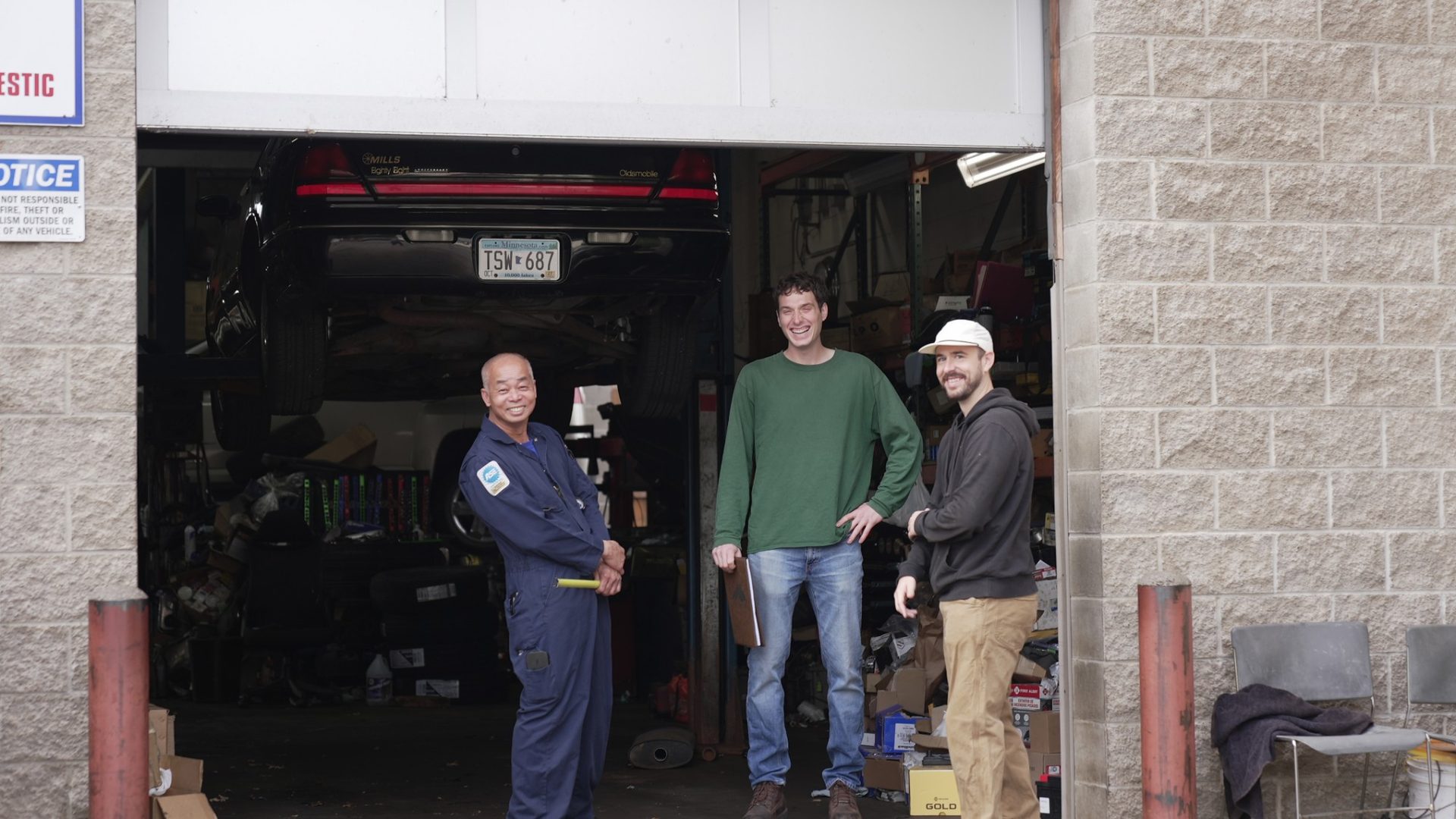
Across the street, the baristas at the local coffee shop have stories of Nghia shoveling their snow. When you walk inside his shop, you'll see his walls are covered nearly floor to ceiling in notes from customers, some with simple thank-yous, others funny quips or borderline inappropriate jokes. (In all fairness, Nghia does have a pretty large sign on display warning that jokes may be at your offense, so his customers know exactly what to expect.)
During Nghia's solar installation, we sat down to get to know him on a personal level because, frankly, we were curious how he came to cultivate the unique atmosphere of his shop. Was it even on purpose? What about Nghia's life shaped him into both a mechanic and a lighthearted neighborhood jokester?
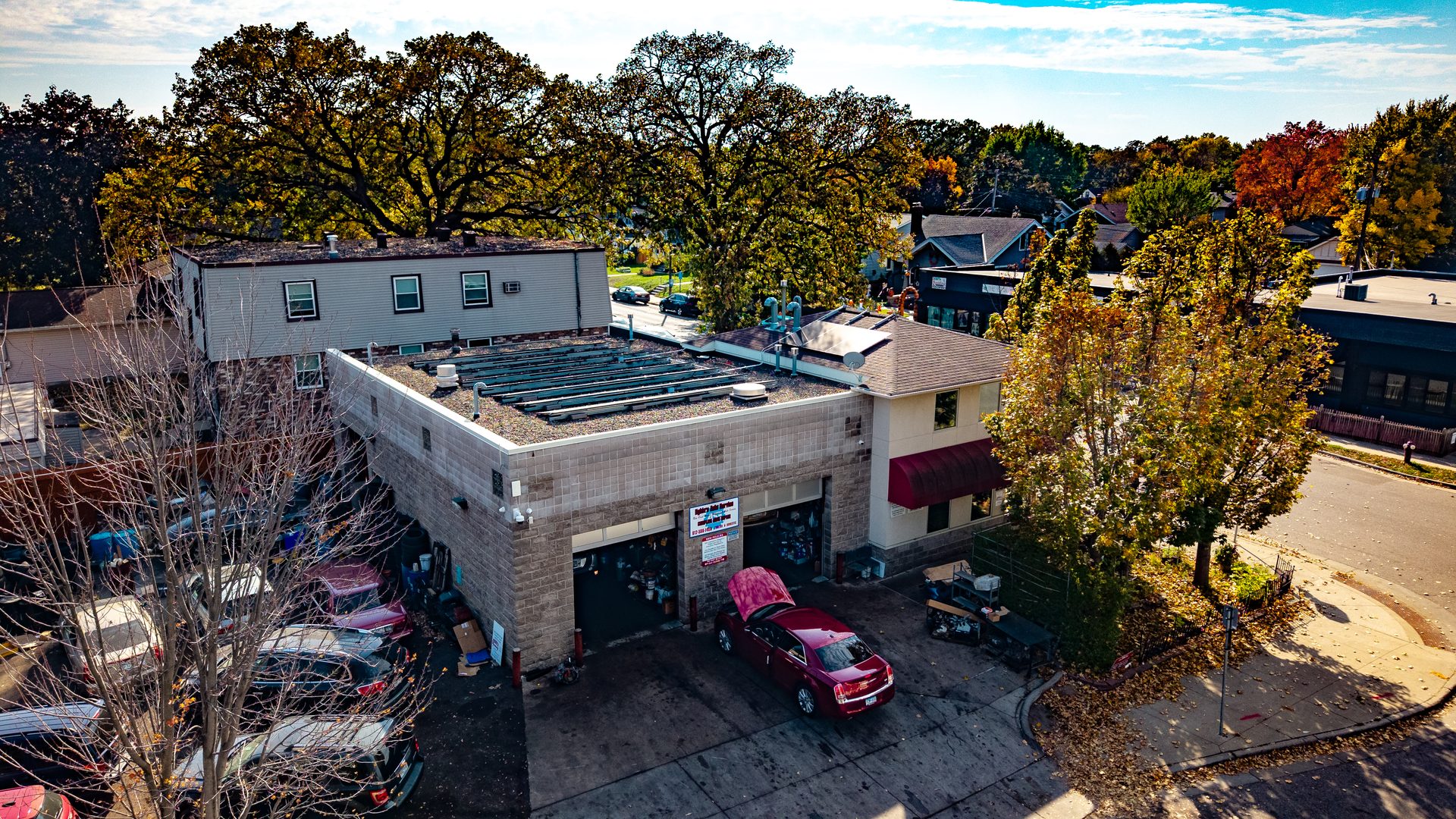
In a single afternoon, as customers called and auto parts sales reps shuffled in and out of the shop, Nghia let us in on his story.
Growing up in Vietnam
Nghia was born in Vietnam and lost both of his parents at a young age. Raised by his grandmother, he worked at a sugarcane plantation as a child, which provided him a meal a day and a place to sleep. By the time he was eleven years old, he switched to working in the jungle at a rubber tree farm.
"When I worked there, I always wanted to buy a pair of rubber rain boots, because you walk in the jungle with the tall grass and your feet are always wet in the morning with the fog. To buy a pair of rain boots, it would take two months of my wages."
He described to us the limited sizes available and how he didn't end up buying the boots after all, because they were too expensive.*
Three attempts to leave the country
When he was fifteen years old, Nghia began his journey to the United States. It took three tries to escape. The boat that finally made it was only supposed to be a short ride out to a bigger ship. Nghia described the obstacles to us in detail and how he and the other refugees pushed through.
First, their boat sprang a leak that they had to patch with mud. "That boat had so many holes that if you didn't bail the water out every five minutes, it got heavy."
Then came massive waves. "People talk about ocean waves as big as a house. You think they're lying, until you get out there. It's huge." Nghia gestured to show the size of the wave, far above his head. "Every time a wave hit, it covered the whole boat. The sides were leaking. My body was wet the entire trip. My brother and I had one piece of tarp to cover ourselves to keep warm, and we still had to stay hidden."
Their engine also ran out of oil. "We were floating on the ocean. We had a little blanket and held it up as a sail. One of the people on the boat was a military police officer, and he said diesel has oil properties in it. So he poured diesel into the crankcase, and we kept going. Smoke everywhere, knocking, but it kept going. Besides that, we didn't have enough fuel. We only had 60 liters, about 20 gallons of diesel, because we thought the boat was just for taxiing out."
By multiple miracles, Nghia survived the journey alongside thirty-one other refugees, including his brother. He recounted the kindness shown to him along the way, starting just before the refugee camp island.
"I remember standing in a holding cell, and a guy walked by eating a donut. He ate half of it and gave the other half to me. It tasted very good," he said, tearing up.
"Right now, every chance I have, I buy donuts. When I was young, I'd eat a dozen filled donuts. Every time I had money, I bought them."
Paper routes and pilot school
So now he's in the United States, but how did he become the staple neighborhood mechanic? At this point in the story, he's still only fifteen years old.
"I thought in America you got everything free. Free housing, no taxes, they give you a car. Then I got my paper route, and my uncle made me pay taxes on my first paper route. So I got my first three months free in America, and I've paid ever since. My first paper route was 230 papers. Most American kids had maybe 20 or 30, and they had parents and a wagon. Here I am, no wagon. I had a bike."
He kept up his paper route for nine years, into college, where he was in school to become... a pilot.
Back on the rubber plantation, Nghia had dreamed of driving a Caterpillar, because the operators clearing the jungle made good money, or a bus, because in Vietnam everybody travels by bus. "Then I came to America and everybody can drive." So he took to flying.
He even trained himself out of motion sickness. "I made myself ride rides over and over so I could overcome the motion sickness. I went to school to be a pilot for the first two years, and every dollar from the paper route, I burned in the sky with an airplane. I made a lot of mistakes up there. I could have been killed so many times."
In 1993, Northwest Airlines laid off a lot of pilots, which led Nghia to reconsider flying. "If I continued as a pilot, when I got done I'd owe a lot of money and might not have a job, because I'd have to compete with experienced pilots. So I decided to become a mechanic. At least I could fix my own car."
Learning to fix cars
By then, Nghia was driving his paper route, and his car broke down a lot. He depended on a mechanic who could only come after his own workday, at six or seven at night. "Sometimes he showed up and sometimes he didn't, and I had no car to deliver papers. That really put me in a scramble."
Well before opening his own shop, Nghia learned how much a reliable mechanic matters.
"When you come in, I know you need your car. That means if I stay here until midnight, or until the next morning, to get your car going, you will remember that."
As he sees it, that customer walks away thinking: "Last time I had a problem, he's the one who bailed me out. He's the one who stayed late and stuck his neck out to help me. So next time I have a problem, I'll go to him."
At the start of mechanic school, a teacher told Nghia to work as a mechanic during his studies, promising he'd learn "10 times faster" than if he only went to school. Alongside his coursework and paper route, he took a mechanic job for $5 an hour, about half of what he had been making at his previous job. "I set my goal to learn. In 30 days I got a 50-cent raise."
But that routine didn't last long. "I went to full-time mechanic and full-time school. Two full-times plus the paper route. Then in college I started falling asleep in class. Every day I drank two liters of Mountain Dew. So I said, okay, I'm paying for school; the paper route has to go."
After graduating, he enrolled in the Toyota master mechanic program and kept learning and working. "During the day I worked at a Toyota dealership, and at night I worked at a limousine company as a mechanic. Each day I worked between 14 and 18 hours." As Nghia said this, a customer listening in pointed out that he still works that many hours today.
Building the shop
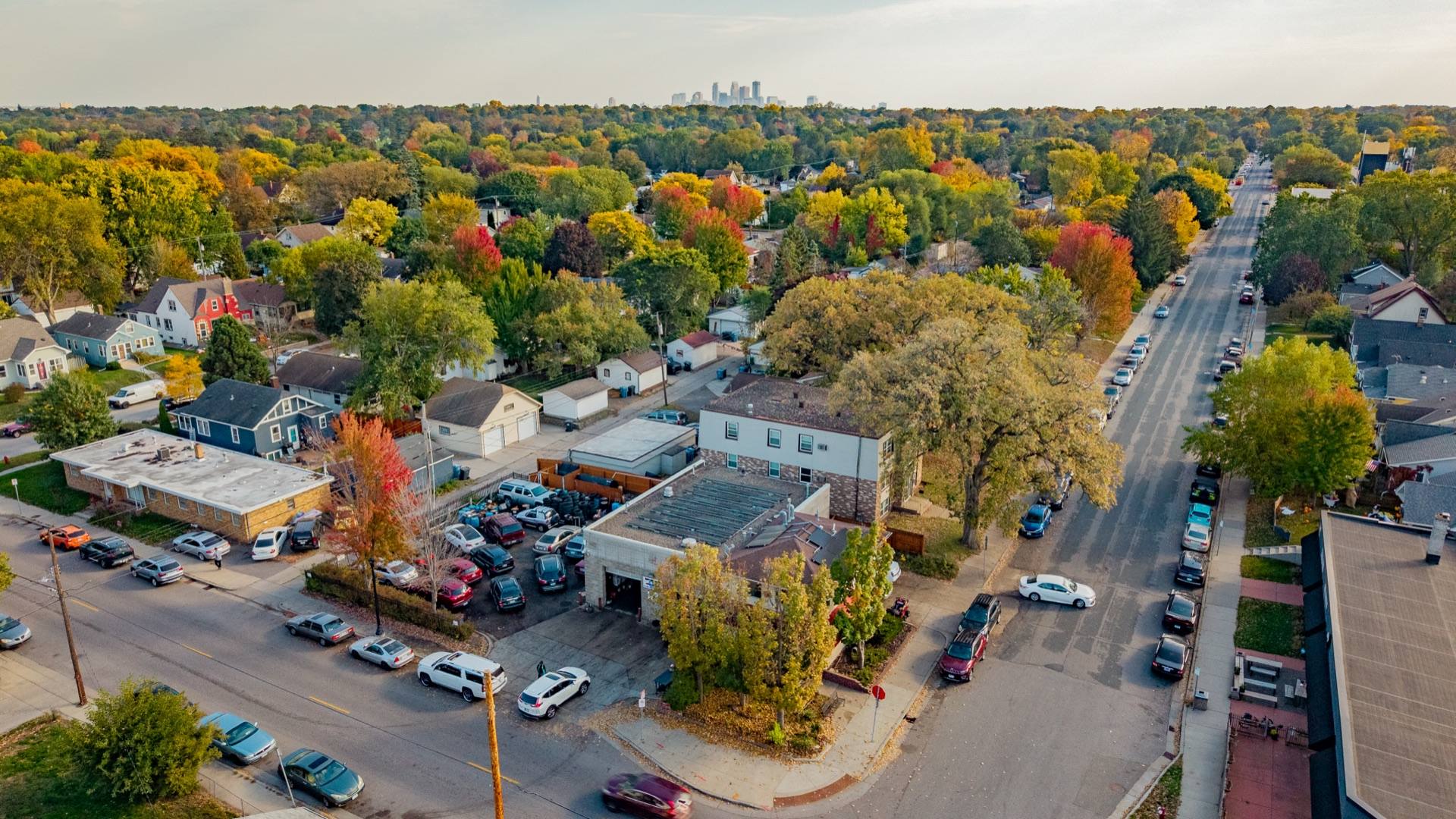
After seven years at the limousine company, Nghia set his sights on running his own shop. "In South Minneapolis, all the shops were expensive, $200,000 up to $300,000 or $400,000. I found this place for $50,000, this place right here. It was all run down. I renovated and fixed this place for six months. During the day I worked, then at 10 o'clock at night I came here and worked until 3 or 4 in the morning, then went back to work. For six months."
"So how I became a mechanic? Because I failed at aviation," he says with a chuckle, before telling us about his dream of flying around Vietnam someday. He also hopes to teach mechanics, but only to people who are genuinely interested in learning.
Customers for life
Nghia has a natural gift for bringing light to what is often a dreadful and expensive experience: taking your car to get fixed. He needs no marketing; his honest work does all the selling. His customers trust him and pay him back in loyalty.
"A customer came in, I did the oil change, and his AC didn't work. I fixed his AC. I wasn't even supposed to work on that, and I didn't charge him anything. He's been my customer ever since. He said, 'Nghia, you fixed my AC. [Another shop] charged me and it didn't work. You fixed it, it worked, and you didn't charge me a penny.' So he started coming in, all his kids, everybody. Now you've got a customer for life. Just that alone."
He pauses. "I do care about my work. I do care about my clients. I do care about my business. Even when a car goes bad, something not working right, I make sure it works right for the customer. Not just take your money and go."
His advice: go beyond
When we asked Nghia for his advice on running a small business, he said:
"Just do your best... no, go beyond. Don't just do your best. You can do your best and still fail people. Your best could suck. Your best might not be equal to what I do. Do all you can do. Don't stop at what you can do. Do more. That's the only way you succeed. If you only do enough, you just stay there. You cannot excel."
He continued: "So you go beyond. People will see how hard you work. Then if there's a mistake or anything less than perfect, they'll still have a chance to forgive. Same thing with my work here. I do as much as I can, beyond what I can do, so I don't give them a chance to have a complaint or a concern."
The first Loon Award
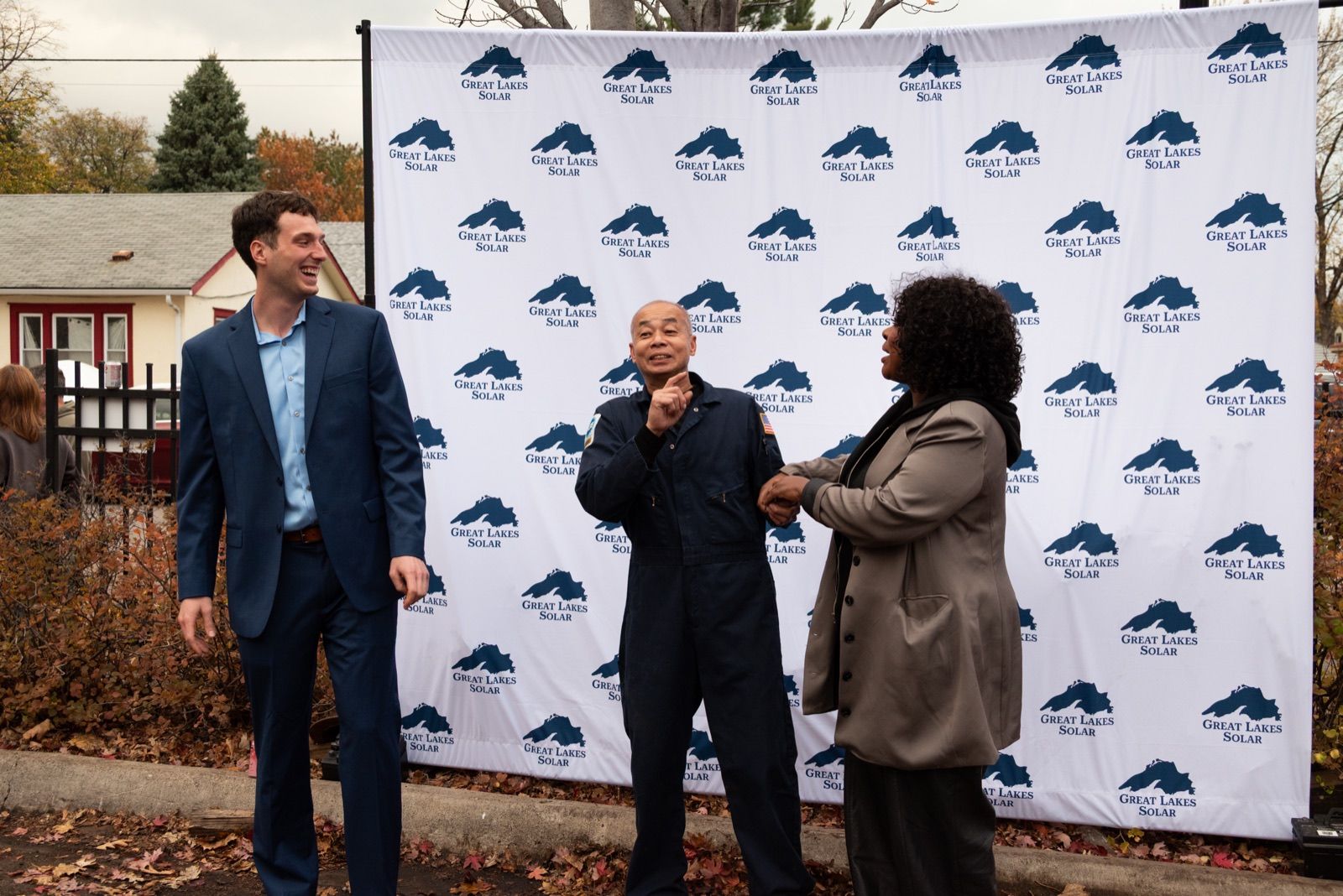
Nghia is a beloved member of the North Minneapolis community. Great Lakes Solar had the honor of celebrating his impact with the first Great Lakes Solar Loon Award at the ribbon cutting in Nghia's lot on Wednesday, Oct. 28.
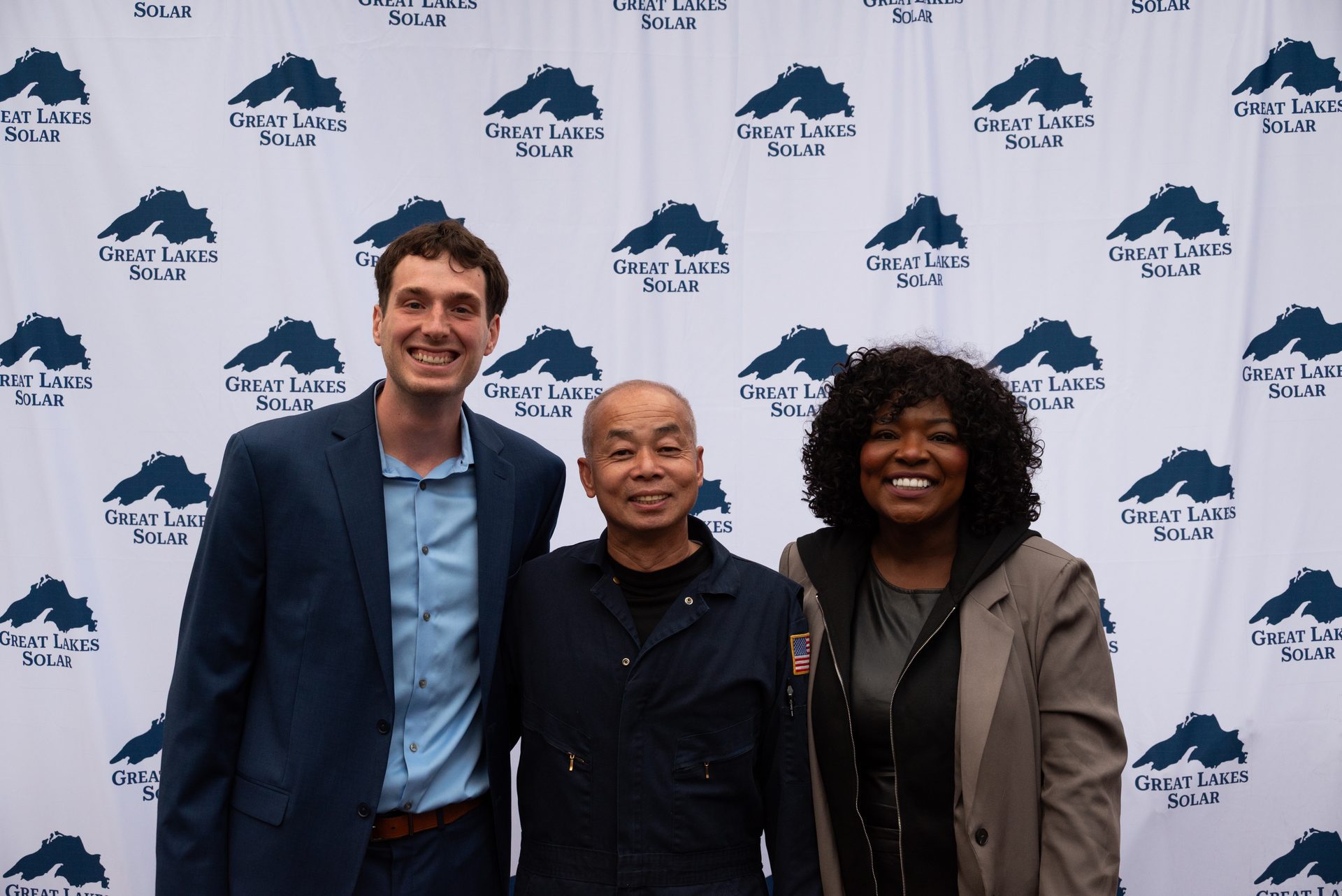
Just as a simple encounter with a loon led our founder Jacob to start Great Lakes Solar, Nghia's honest and lighthearted presence in the community brightens people's days. He reminds us why we want to make the world a positive and inclusive place for all.
*If you're wondering, today Nghia owns two pairs of rain boots. He doesn't wear them often, but with watery eyes he told us how much they mean to him, because they represent just how far he's come.
Event photos by Ethan Dorn. Drone and pre-project photos by G2 Perspectives.